
VRI vs. OPI vs. On-Site Interpreting: Which Modality Fits Which Situation
Most organizations do not need to pick one interpreting modality and use it for everything. They need a decision rule: which situations call for a phone interpreter, which call for video, and which genuinely require a human being in the room. Getting that rule wrong in either direction is expensive, either because you are paying on-site rates for a two-minute phone call, or because you are trying to run a courtroom hearing over an audio line that was never designed for it.
This guide lays out the practical differences between over-the-phone interpreting (OPI), video remote interpreting (VRI), and on-site interpreting, then walks through common real-world scenarios so you can build that decision rule for your own organization.
Quick Answer
- Use OPI for short, unplanned, audio-only conversations where speed and cost matter most.
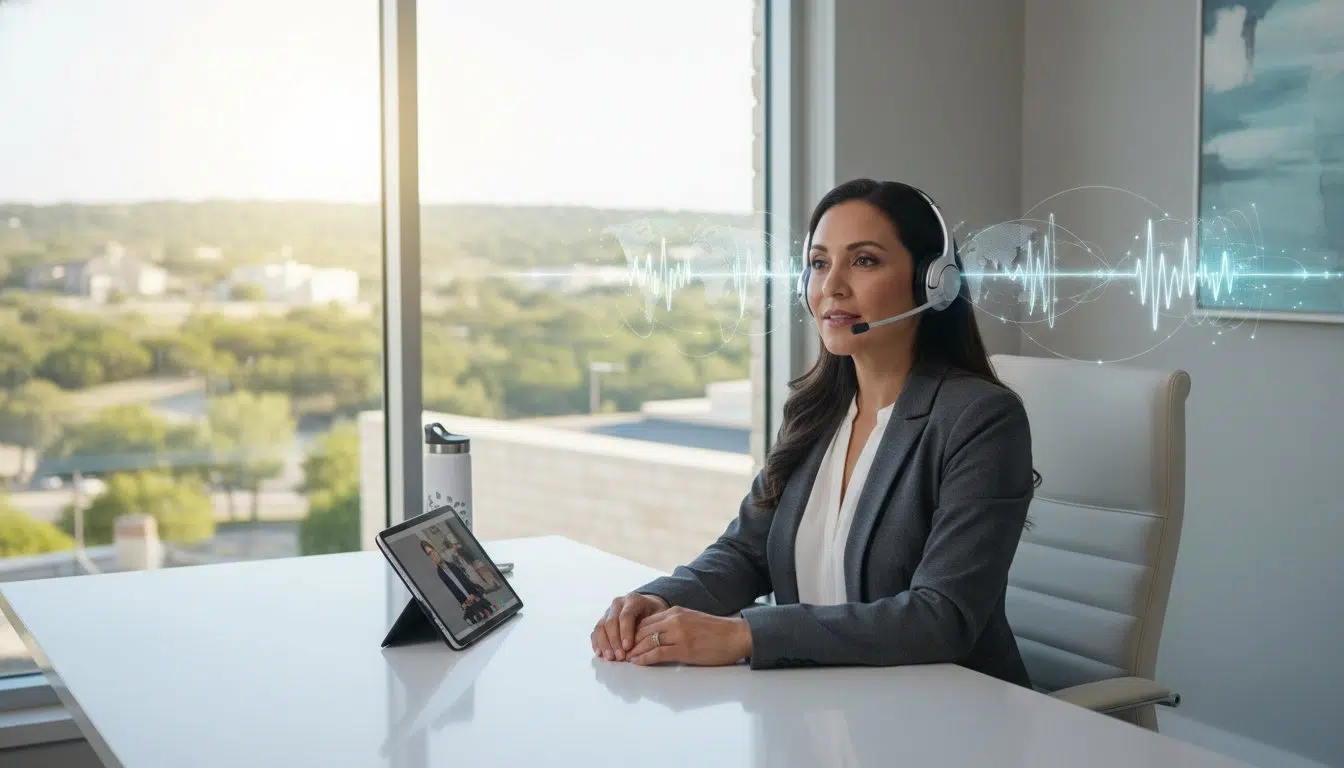
- Use VRI when the interpreter needs to see the room, when American Sign Language is involved, or when a rare language has no local in-person option.
- Use on-site interpreting for long sessions, legal proceedings, physical exams, and any encounter where presence itself changes the outcome.
- Cost roughly triples as you move from OPI to VRI to on-site, so matching the modality to the actual stakes of the encounter is the single biggest lever for controlling an interpreting budget.
The Three Modalities at a Glance
| Factor | OPI (Phone) | VRI (Video) | On-Site (In-Person) |
| Connection time | Seconds to about a minute | Under a minute to a few minutes | Hours to days, depending on scheduling |
| Typical cost | $0.47 to $1.50+ / minute | $1.50 to $7 / minute | $50 to $150+ / hour, 2-hr minimum |
| Visual context | None | Full video, including ASL and documents | Full, in person |
| Best for | Short, routine, unplanned conversations | ASL, rare languages, telehealth, court testimony | Long sessions, legal proceedings, exams |
| Equipment needed | Any phone or headset | Camera, screen, stable broadband | None beyond the interpreter’s presence |
| Availability | 24/7, widest language coverage | 24/7 for most common languages | Scheduled, subject to local interpreter supply |
How to Decide: A Scenario Walkthrough
Emergency Room Intake
A patient arrives in acute distress and staff need to communicate within minutes. OPI is usually the fastest option and is appropriate for triage questions and basic history-taking. If the patient is deaf or hard of hearing, VRI is the required default under ADA guidance unless the patient states in good faith that it is not achieving effective communication; in that case, an in-person ASL interpreter must be arranged.
Scheduled Specialist Consultation
A cardiology follow-up scheduled a week in advance, expected to run 30 to 45 minutes and involve reviewing imaging on a screen. VRI is typically the best fit here: the interpreter can see the images and the physician’s gestures, and the appointment is predictable enough to schedule in advance at a lower rush rate.
Deposition or Court Hearing
Legal proceedings almost always call for on-site or, where courts explicitly permit it, VRI meeting specific technical standards, because the interpreter’s demeanor, precision, and ability to request clarification are part of the legal record. Most courts do not consider phone interpreting adequate for sworn testimony.
IEP or Parent-Teacher Meeting
A scheduled meeting in an Education Translation and Interpretation Services setting reviewing written documents with a parent who reads and speaks the same language. VRI works well if the documents can be shared on screen; on-site is preferable if the meeting is long, emotionally sensitive, or involves multiple staff members and the parent needs to build trust with a visible, present interpreter.
Insurance Claims Call Center
A claims adjuster in Insurance Translation and Interpretation Services taking a recorded statement over the phone from a policyholder. OPI is the natural fit since the call is already audio-only and typically short, and per-minute phone pricing keeps the cost of high call volume manageable.
Surgical Consent and Pre-Operative Consultation
Informed consent for a procedure carries significant legal and clinical weight, and many hospitals require an on-site interpreter, or at minimum VRI meeting full federal technical standards, rather than phone-only interpretation, because the patient’s comprehension needs to be unambiguous and well documented.
Multilingual Conference or Board Meeting
None of these three modalities is designed for a multi-speaker, multi-language event; that calls for simultaneous or consecutive conference interpreting with a properly staffed team.
A Simple Decision Framework
- Step 1: Is the encounter unplanned or urgent? If yes, start with OPI unless the individual is deaf or hard of hearing, in which case default to VRI.
- Step 2: Does the conversation depend on visual information, documents on screen, or sign language? If yes, use VRI.
- Step 3: Is the encounter legally binding, likely to become part of a record, or expected to run more than an hour? If yes, use on-site interpreting.
- Step 4: Is a local interpreter available on short notice in the needed language? If no, VRI or OPI is often the only realistic option regardless of the other factors.
What Happens When Organizations Get the Match Wrong
Overusing on-site interpreting for short, routine encounters is the most common and most expensive mistake, since a 15-minute conversation still triggers a two-hour minimum bill. The opposite mistake, trying to run legally sensitive or visually dependent encounters over a phone line, creates real compliance and quality risk: Section 1557 and ADA obligations are not satisfied simply because a call connected; they require that communication actually be effective for the setting.
Frequently Asked Questions
Can I switch modalities mid-encounter?
Yes, and it is common practice. A provider with strong platform integration can start a call on OPI and escalate to VRI, or bring in an on-site interpreter for a portion of a longer visit, without losing continuity.
Which modality is required for ASL by law?
In-person interpreting is the default expectation for effective communication under the ADA, but VRI meeting federal technical standards is an accepted alternative, provided the individual is not asserting in good faith that it is not working for them.
Is on-site interpreting ever the cheapest option?
Yes, for long sessions. Because on-site is billed hourly rather than per minute, a multi-hour engagement, such as a full-day training or a lengthy deposition, can end up cheaper per hour than VRI billed continuously at a per-minute rate.
How do I decide for a language with very few available interpreters?
Availability often overrides the usual decision framework. If a rare language has almost no local in-person coverage, OPI or VRI may be the only practical option even for encounters that would otherwise call for on-site interpreting.
Final Word
There is no single best interpreting modality, only the modality that fits a given encounter’s urgency, visual demands, and stakes. Organizations that build a clear routing rule, rather than defaulting to whichever modality they used last time, get better outcomes and a materially lower interpreting bill.
Voxivera offers over-the-phone, video remote, and on-site interpretation under one contract, so your team can route each encounter to the right modality without juggling multiple vendors. Request a quote to build a routing plan for your organization.