

Over-the-Phone Interpreting Services for Multilingual Language Access
A patient calls a clinic front desk speaking only Haitian Creole. A claims adjuster needs a statement from a Farsi-speaking policyholder in the next ten minutes. A 911 dispatcher has thirty seconds to understand a caller in distress. None of these situations can wait for a scheduled interpreter. They need a qualified interpreter on the line right now, and that is exactly the gap that over-the-phone interpreting was built to close.
Over-the-phone interpreting, usually shortened to OPI, is the most widely used form of spoken-language interpreting in the United States because it deploys fastest and depends least on hardware. This guide explains how OPI works, how it compares with video and on-site interpreting, what United States law requires of organizations that serve limited English proficient populations, and how to evaluate a provider before you sign a contract.
Quick Answer
- OPI connects a caller to a professional interpreter through a phone line or app-based audio call, typically within seconds, in 200 or more languages.
- It is the lowest-cost, fastest-access interpreting modality, and the default choice for short, audio-only, or unplanned encounters.
- US healthcare, government, and federally funded organizations are required by law, not just best practice, to provide qualified interpreters to limited English proficient individuals.
- Pricing is billed per minute and varies by language, time of day, and contract volume; published US government contracts show rates from roughly $0.47 to $1.50 or more per minute.
- The right modality depends on the setting: OPI for speed and simple exchanges, video for visual or high-stakes encounters, on-site for legal proceedings and long sessions.
What Is Over-the-Phone Interpreting?
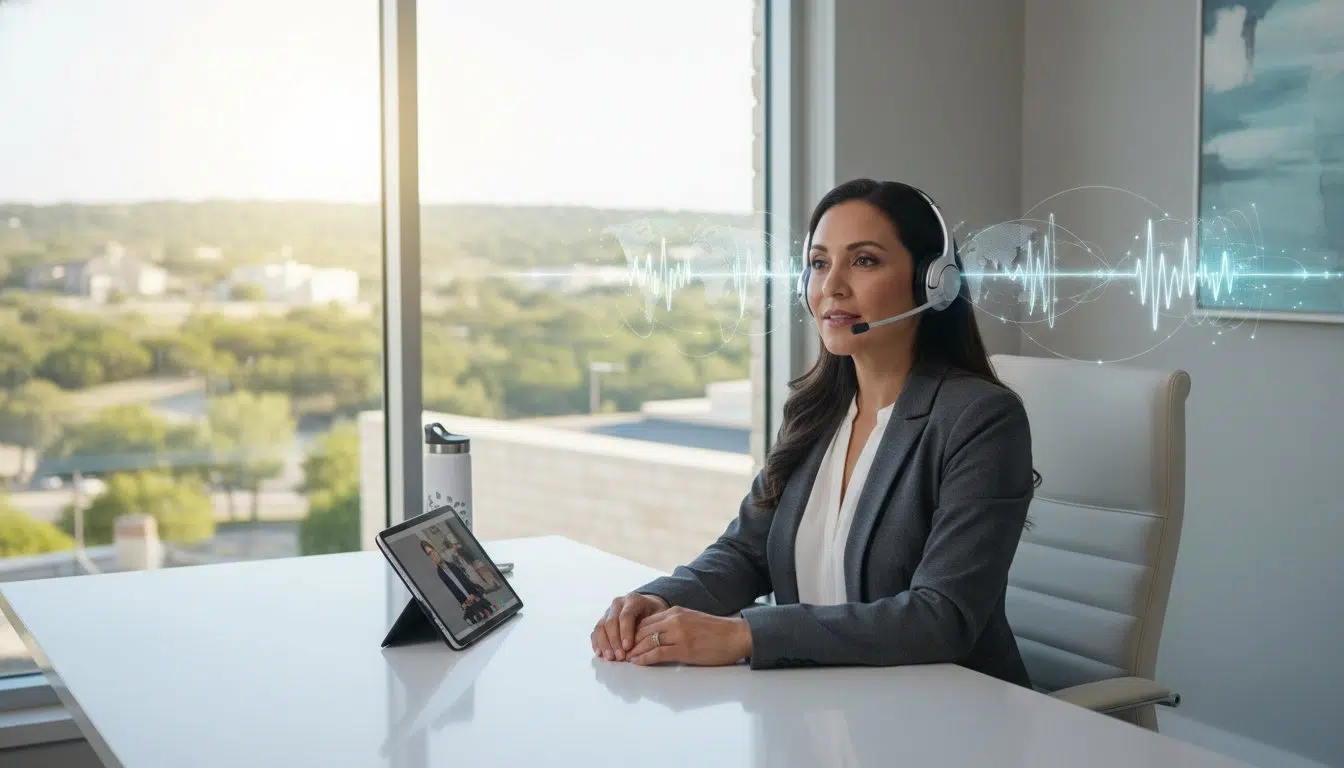
OPI is a form of consecutive or simultaneous spoken-language interpreting delivered entirely through audio. A caller dials a dedicated access number or opens an app, enters an account code and language, and is routed to an available interpreter, usually within thirty to sixty seconds. The interpreter joins the call as a three-way conference between the organization’s staff member, the limited English proficient individual, and the interpreter.
Because there is no video feed, booth, or travel time, OPI is the only interpreting modality that can realistically be available around the clock, in hundreds of languages, at a moment’s notice. The tradeoff is that the interpreter cannot see body language, documents, or visual cues, which makes OPI better suited to conversational exchanges than to procedures that depend on gestures, signage, or written material.
How Over-the-Phone Interpreting Works
1. Connection
Most providers issue a toll-free access number and a client or department code. Staff dial in, select or speak the needed language from a menu, and are connected to the next available qualified interpreter. Dual-handset phones, speakerphones, and headsets are all common ways to conduct the call.
2. The Three-Way Conversation
The interpreter renders each party’s speech into the other language, either consecutively, pausing between speakers, or near-simultaneously once rapport is established. A skilled interpreter identifies themselves, briefly explains their role, and interprets everything said without adding, omitting, or summarizing content.
3. Documentation
Most enterprise OPI platforms automatically log call duration, language pair, and interpreter ID, which matters for compliance reporting under the civil rights and healthcare regulations discussed below.
When Over-the-Phone Interpreting Is the Right Choice
- Unscheduled or walk-in encounters where no advance notice is possible
- Short conversations such as appointment scheduling, intake screening, or billing questions
- Rare languages and dialects where an on-site or video interpreter is not readily available locally
- After-hours, weekend, or emergency situations, including nurse triage lines and crisis hotlines
- Call centers and multilingual customer support desks
For encounters that involve documents, diagrams, physical exams, sign language, or high emotional and legal stakes, video remote interpreting or on-site interpreting is usually the better fit.
Why US Organizations Are Legally Required to Provide Interpreters
Language access in the United States is not simply good customer service; for many organizations it is a federal civil rights obligation. Three overlapping frameworks drive most OPI purchasing decisions.
Title VI of the Civil Rights Act of 1964 and Executive Order 13166
Title VI prohibits national-origin discrimination by any entity receiving federal financial assistance, which courts and federal guidance have long interpreted to include failing to provide language access to limited English proficient individuals. Executive Order 13166 directs federal and state agencies and their funding recipients, including hospitals that accept Medicare or Medicaid, to take reasonable steps to ensure meaningful access.
Section 1557 of the Affordable Care Act
Section 1557 extends nondiscrimination protections to healthcare, and its regulations specifically bar the use of unqualified interpreters. Under the applicable rules, minor children may not be used to interpret except in an emergency, adult family members and friends may not be relied upon unless the patient specifically requests them, and even a bilingual staff member cannot interpret unless their proficiency has been formally assessed and interpreting is part of their documented job duties. The Department of Health and Human Services Office for Civil Rights issued further guidance in a December 2024 Dear Colleague letter clarifying what counts as a qualified interpreter and how machine translation may and may not be used.
The Americans with Disabilities Act and Joint Commission Standards
While the ADA primarily governs auxiliary aids for individuals who are deaf or hard of hearing, hospitals accredited by the Joint Commission are separately expected to document language access as part of patient-centered communication standards, which is one reason OPI call logs and interpreter credentials matter during accreditation surveys.
Who Qualifies as a Professional Interpreter
A bilingual employee is not automatically a qualified interpreter under US regulatory definitions. Professional credentialing for spoken-language interpreters in the United States runs through a small number of recognized bodies:
- CCHI (Certification Commission for Healthcare Interpreters) offers a written CoreCHI credential valid across languages and an oral CHI credential currently available for Spanish, Arabic, and Mandarin.
- NBCMI (National Board of Certification for Medical Interpreters) offers a written HubCMI credential and an oral CMI credential covering Spanish, Mandarin, Cantonese, Russian, Vietnamese, and Korean.
- NAJIT and state court certification consortia govern legal and court interpreter credentialing state by state.
- ASTM F2089-24, the current edition of the Standard Practice for Spoken and Sign Language Interpreting, replaced the older 2015 version in September 2024 and defines the baseline qualifications, working conditions, and code of conduct that reputable OPI providers train and audit against.
What Over-the-Phone Interpreting Costs
OPI is billed per minute rather than per session, and rates vary with language, contract volume, and time of day. Published US state government procurement contracts give a realistic view of enterprise pricing that most marketing pages do not disclose: one 2025 state contract lists Spanish OPI at $0.47 per minute and the next twelve most-requested languages at $0.53 per minute, while another state’s contract lists a flat $0.57 per minute across all languages. School district vendor lists in the same period show independent agencies charging closer to $1.25 to $1.50 per minute for phone interpreting.
Choosing an Over-the-Phone Interpreting Provider
- Connection speed: ask for the provider’s average and 90th-percentile time-to-connect, not just a marketing average
- Language depth: confirm coverage for your actual patient, client, or caller population, including rare dialects, not just the top ten languages
- Interpreter credentialing: request the certifying body and credential level behind each language, not a blanket claim of certification
- Compliance documentation: confirm the platform logs call data in a format that supports Title VI and Section 1557 reporting
- Integration: check whether the platform connects to your EHR, case management, or contact center software so staff are not dialing a separate device
- Contract structure: compare per-minute rates, minimum call charges, after-hours multipliers, and any monthly minimums before committing
Frequently Asked Questions
What is the difference between OPI and VRI?
OPI is audio-only and connects in seconds, while video remote interpreting (VRI) adds a live video feed so the interpreter can see body language, signage, or an ASL signer. VRI typically costs more per minute and requires a stable broadband connection and a screen. A full side-by-side comparison, including which modality fits which scenario, is available in our VRI vs OPI vs on-site guide.
How fast does an OPI call connect?
Enterprise platforms generally target connections in well under a minute for common languages, though rare languages can take longer because fewer interpreters are credentialed in them.
Is over-the-phone interpreting HIPAA compliant?
It can be, provided the platform uses encrypted transmission, does not record or store audio without authorization, and the interpreter has signed a confidentiality agreement. Ask any prospective provider for their HIPAA compliance documentation directly.
Can OPI be used in a courtroom or deposition?
It is sometimes used for brief, low-stakes exchanges, but most courts require a certified interpreter physically present or on video for testimony and legal proceedings, since accuracy and the record of proceedings are held to a higher standard.
How many languages does OPI typically cover?
Established national providers generally support 200 or more languages and dialects, though instant, sub-minute connection times are realistic only for the most commonly requested 20 to 40 languages.
Final Word
Over-the-phone interpreting is the workhorse of US language access: fast, affordable, and available at any hour for the great majority of everyday conversations. It is not a replacement for video or on-site interpreting in every scenario, but paired correctly with those modalities it is usually the difference between a limited English proficient caller getting help immediately and getting no help at all.
Voxivera’s over-the-phone interpretation services connect callers to certified interpreters in 300+ languages, with sub-30-second average connection times and HIPAA-compliant call handling built for healthcare, legal, and government use. Explore our video remote interpretation and on-site interpretation services for encounters that call for a different modality, or request a quote to design a language access program around your organization.

Permalink